
A recent report by the Open University has uncovered some stark findings around skills shortages in businesses in the UK.
Of those surveyed, 54% of organisations in the UK state that they have a skills shortage, rising to 58% in Wales.
Of these, 32% believe that the shortage will worsen over the next five years (38% in Wales).
Where does that leave businesses?
Skills shortages can have hugely detrimental impacts on business – both for their performance and their culture. Skills shortages can make it difficult to achieve goals, negativelyimpact productivity, and hinder growth. Another impact is on existing staff – skills shortages create pressure on staff and create additional workloads. A staggering 40% of businesses identified increased workload for other staff (40%) as the biggest issue over the next five years.
How to combat this?
The obvious answer is to invest in training and development – but current economic circumstances can often lead businesses to feel that this investment is untenable, with around 29% stating that lack of funds or budget is the biggest barrier to investing in training. However, businesses must consider the cost of not investing in training and development.
By not looking to address these skills shortages, the problems will perpetuate, and alongside the obvious problems (such as performance and lack of growth), there will also be additional problems to arise. Businesses may see poor attrition rates, as staff leave to explore opportunities elsewhere, or due to the increasing workload placed on them. Businesses may also see a decline in employee satisfaction and even run the risk of greater sickness absence due to the mental health impact.
Who picks up the bill?
The survey reports that 45% of respondents believe that employers should be primarily responsible for funding employees’ work-related training. However, with both businesses and individuals feeling the pinch of the economic downturn, this raises questions of how likely it would be for staff to fund their own training.
A crucial finding from this report that would suggest that businesses would benefit greatest from investing in training, is that £13,079 is the average cost of replacing an HR manager, while upskilling an existing employee for the same role costs only £3,107
In other words, upskilling was 76% cheaper than hiring.
The return for businesses when investing in training is hugely significant. Not only does it alleviate the pressure on staff, but it demonstrates an investment in their people, creates positive pathways and encourages innovation, and creates a culture of ongoing learning and development. These, coupled with the financial returns (lower recruitment figures, greater growth, and better performance), all surely demonstrate the need to invest in closing the skills gap.
How can we help?
Aspire 2Be can offer support for businesses looking to make an investment in their people. If cost is the deciding factor, there is a range of options available that include fully funded* professional qualifications and courses. These cover key areas where skills shortages have been identified, particularly around the Digital agenda.
If it’s time constraints that are a barrier to learning, the latest range of Micro-credentials are the ideal way to introduce bite-sized learning, all fully accredited. Courses cover Digital Skills, AI in the Workplace, ILM Leadership & Management, and Digital Product Management.
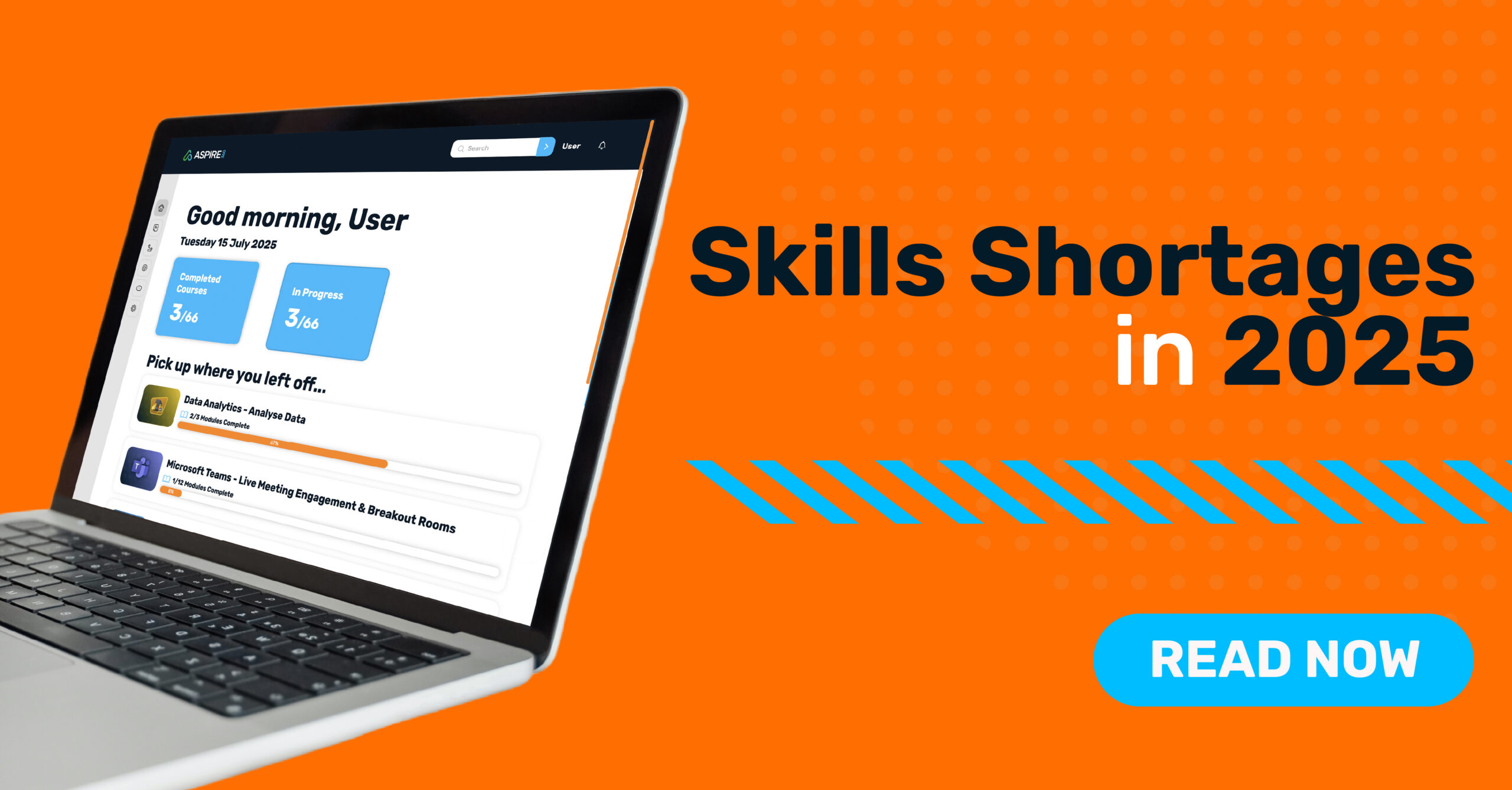
For large scale, whole-company training that will provide a single solution for a range of abilities, Aspire360 is scalable, affordable, and accessible. With a course library of Microsoft 365 focused learning tools, custom learning pathways, and reporting and analytics tools – this is the ideal way to address skills gaps and shortages en masse.
Our learning specialists are on hand to help you explore the best solutions for your business, so don’t hesitate to get in touch.